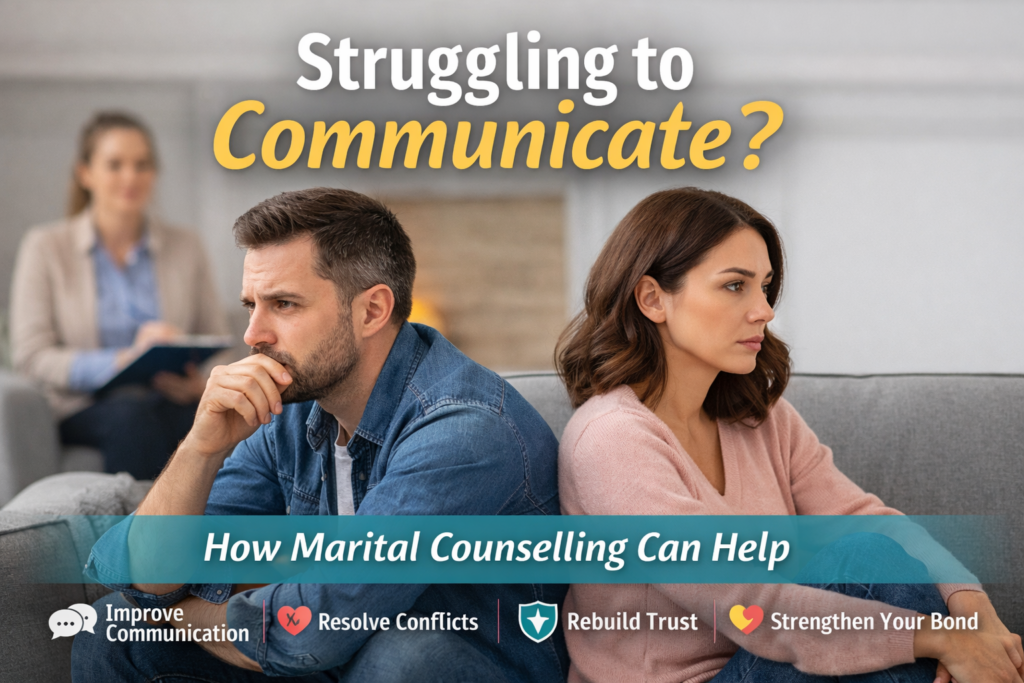
Communication is the foundation of every healthy relationship. Yet, for many couples, it’s also the biggest challenge. Conversations turn into arguments, silence replaces connection, and misunderstandings slowly create emotional distance. If you and your partner find yourselves stuck in this cycle, you’re not alone—and more importantly, help is available.
Marital counselling offers a safe, structured environment where couples can rebuild communication, resolve conflicts, and reconnect emotionally. In this blog, we’ll explore why communication breaks down, how it affects relationships, and how professional counselling can guide you back to a healthier, more fulfilling partnership.
At the beginning of a relationship, communication often feels effortless. Over time, however, life’s demands—work stress, family responsibilities, financial concerns—can strain even the strongest bonds.
Here are some common reasons communication starts to fail:
Couples often assume they know what their partner is thinking or feeling. This can lead to misunderstandings and unnecessary conflict.
Past hurts, unresolved arguments, or childhood experiences can influence how we communicate. Sometimes, reactions are more about past pain than present situations.
Many partners listen to respond rather than to understand. This creates a cycle where neither person feels truly heard.
Some couples avoid difficult conversations altogether to keep the peace. Ironically, this often leads to deeper resentment over time.
Excessive screen time and reduced face-to-face interaction can weaken emotional connection and meaningful communication.
Not all communication problems are obvious. Here are some subtle (and not-so-subtle) signs that your relationship could benefit from support:
If these patterns sound familiar, it may be time to consider professional help.
Marital counselling, also known as couples therapy, is a form of psychotherapy that helps partners improve their relationship. A trained psychologist or therapist works with both individuals to understand their dynamics, identify issues, and develop healthier ways of communicating.
It’s important to understand:
Marital counselling is not about assigning blame—it’s about building understanding.
One of the biggest barriers to communication is fear—fear of judgment, rejection, or escalation. A counsellor provides a neutral, supportive environment where both partners can express themselves openly.
Counselling helps couples learn how to truly listen. This includes:
These skills can transform how conversations unfold.
Many couples fall into harmful patterns such as:
A therapist helps you recognize these behaviors and replace them with healthier alternatives.
Sometimes, people struggle to communicate because they don’t fully understand their own emotions. Counselling helps individuals identify and express their feelings more clearly.
When you begin to see things from your partner’s perspective, conflicts become easier to resolve. Counselling fosters empathy, which is key to meaningful communication.
You’ll learn actionable strategies such as:
Communication problems often stem from deeper relationship challenges. Counselling can help address:
By tackling these root causes, communication naturally improves.
Couples often rediscover the emotional bond that brought them together.
Arguments become more constructive rather than destructive.
Better communication leads to greater happiness and fulfillment.
Individuals gain self-awareness and emotional intelligence.
Counselling equips couples with skills to handle future challenges effectively.
A common misconception is that counselling is only for couples on the brink of separation. In reality, it can benefit any relationship.
Many couples seek counselling to:
Think of it as preventive care for your relationship—not just a last resort.
If you’re considering marital counselling, here’s what the process typically looks like:
The therapist gathers information about your relationship, concerns, and goals.
You’ll explore recurring issues and communication habits.
The therapist introduces tools and techniques to improve interaction.
Couples practice new skills during sessions and apply them at home.
Progress is monitored, and strategies are adjusted as needed.
In many cultures, seeking help for relationship issues is still seen as a sign of weakness. However, the truth is quite the opposite.
Choosing counselling shows:
Just as we seek medical help for physical health, relationships sometimes need professional support too.
While counselling provides guidance, small daily efforts can also make a big difference:
Even 15–20 minutes of uninterrupted conversation can strengthen your connection.
Focus on understanding, not winning the argument.
Express your feelings without blaming or criticizing.
Stick to the current issue instead of revisiting old conflicts.
Simple expressions of gratitude can improve communication and emotional closeness.
Consider marital counselling if:
The earlier you seek help, the easier it is to address issues before they become deeply rooted.
Struggling to communicate doesn’t mean your relationship is failing—it means it needs attention and care. Every couple faces challenges, but those who invest in understanding and growth often emerge stronger.
Marital counselling offers the tools, guidance, and support needed to break unhealthy patterns and rebuild meaningful connection. Whether you’re facing ongoing conflicts or simply want to strengthen your bond, taking that first step toward counselling can make all the difference.
Healthy communication isn’t about saying the perfect thing—it’s about creating a space where both partners feel heard, respected, and valued.