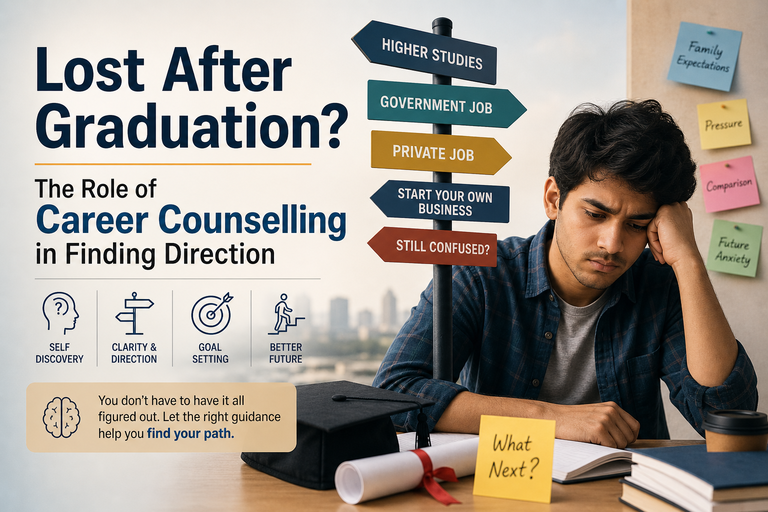
Graduation is often portrayed as a milestone filled with excitement, ambition, and a clear path ahead. But for many young adults in India, the reality feels very different. Instead of clarity, there is confusion. Instead of excitement, there is anxiety. Questions like “What should I do next?”, “Did I choose the right field?”, or “Why does everyone else seem to have it figured out?” begin to dominate the mind.
If you’ve ever felt lost after graduation, you’re far from alone. In fact, this phase of uncertainty is becoming increasingly common. With countless career options, societal expectations, and pressure to succeed quickly, making the “right” decision can feel overwhelming. This is where career counselling steps in—not just as guidance, but as a structured, supportive process to help individuals find direction and purpose.
The transition from college to the real world is one of the biggest shifts in life. Several factors contribute to the feeling of being lost:
1. Lack of Practical Exposure
Many students complete their degrees without real-world exposure. Academic knowledge alone often doesn’t translate into clarity about career paths.
2. Too Many Choices
From traditional professions like medicine and engineering to emerging fields like digital marketing, data science, and content creation—options are endless. Ironically, more choices often lead to more confusion.
3. Societal and Family Pressure
In India, career decisions are often influenced by family expectations. Students may pursue paths that don’t align with their interests, leading to dissatisfaction later.
4. Fear of Failure
The pressure to “get it right” on the first attempt can be paralyzing. Many graduates delay decisions out of fear of making the wrong choice.
5. Comparison and Social Media Influence
Seeing peers succeed on platforms like LinkedIn or Instagram can intensify feelings of inadequacy and self-doubt.
Career counselling is a guided process that helps individuals understand themselves better and make informed career decisions. It combines psychological insights, aptitude assessments, and expert guidance to align a person’s interests, skills, and values with suitable career paths.
Unlike casual advice from friends or family, career counselling is structured and personalized. It focuses on you—your strengths, your goals, and your unique journey.
The first step in finding direction is understanding yourself. Career counselling helps you explore:
Many students realize they’ve never truly asked themselves what they enjoy or what they’re good at. Counselling brings these insights to light.
One of the most powerful tools in career counselling is psychometric testing. These scientifically designed assessments evaluate:
The results provide objective clarity, helping eliminate guesswork from decision-making.
Most graduates are only aware of a limited number of career paths. Career counsellors introduce a wider range of options based on your profile, such as:
They also provide insights into industry trends, growth opportunities, and required qualifications.
Knowing your options is one thing—choosing among them is another. Career counselling helps you:
This structured approach reduces anxiety and builds confidence in your decisions.
Once a direction is chosen, counsellors help you create a clear roadmap:
This transforms vague ideas into achievable plans.
Feeling lost can take a toll on mental health. Career counselling also addresses:
By providing reassurance and clarity, it boosts self-confidence and motivation.
Consider Riya, a psychology graduate who felt unsure about her future. She was torn between pursuing a master’s degree, preparing for government exams, or switching fields entirely.
Through career counselling, she discovered her strong inclination toward human behavior and communication. Her aptitude tests indicated strengths in analytical thinking and empathy. With guidance, she chose to pursue a career in organizational psychology and enrolled in a specialized course.
Today, she works in HR consulting and feels aligned with her career path.
“Career counselling is only for weak students.”
Not true. It’s for anyone seeking clarity—whether you’re a topper or struggling.
“I already know my options.”
Most people only know a fraction of what’s available.
“It’s too expensive.”
Compared to the cost of choosing the wrong career path, counselling is a valuable investment.
“My parents can guide me.”
While parental advice is important, professional guidance is unbiased and based on scientific tools.
You don’t have to wait until you feel completely lost. Career counselling can help if:
Early guidance can save years of trial and error.
In India, career counselling is gaining importance due to rapid changes in the job market. Traditional career paths are no longer the only options, and new industries are emerging every year.
However, awareness about counselling is still limited. Many students rely on hearsay or follow the crowd. This often leads to dissatisfaction, job-hopping, or burnout.
Integrating career counselling into educational institutions and mental health services can significantly improve career outcomes and overall well-being.
Not all counsellors are the same. When choosing one, look for:
A good counsellor doesn’t just give answers—they help you discover them.
While career counselling is highly beneficial, here are a few steps you can take on your own:
1. Reflect on Your Interests
What activities make you lose track of time?
2. Try Internships or Freelancing
Real-world exposure helps clarify preferences.
3. Talk to Professionals
Reach out to people working in fields you’re interested in.
4. Avoid Comparison
Everyone’s journey is different.
5. Take Small Steps
You don’t need to have everything figured out at once.
Feeling lost after graduation is not a failure—it’s a phase of transition. In fact, it can be an opportunity to pause, reflect, and make more intentional choices.
Career counselling acts as a compass during this uncertain time. It doesn’t just point you toward a job—it helps you understand yourself, explore possibilities, and build a fulfilling career path.
In a world full of noise and expectations, having the right guidance can make all the difference. Instead of wandering aimlessly, you can move forward with clarity, confidence, and purpose.
If you or someone you know is struggling with direction after graduation, seeking professional career counselling might just be the first step toward a brighter, more fulfilling future.