
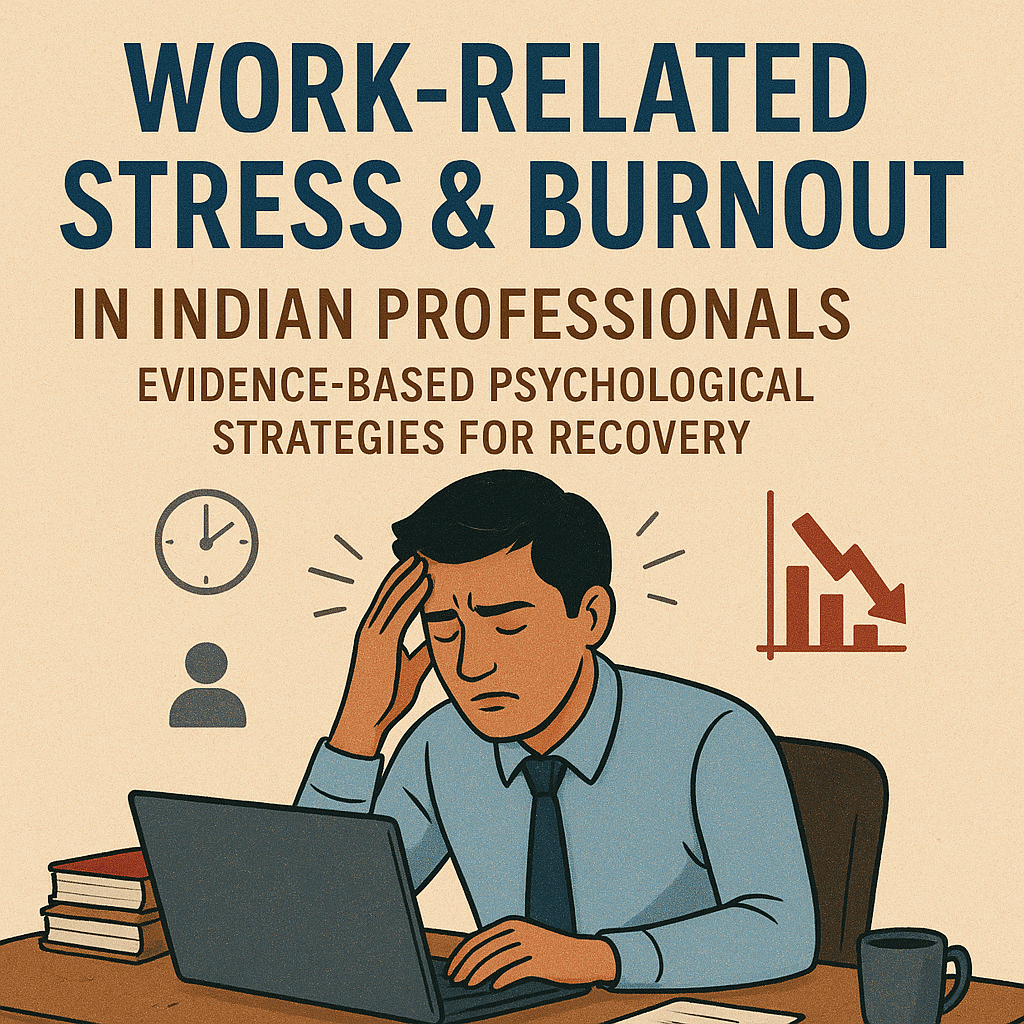
India’s workforce is at a crossroads. On one hand, professionals are driving extraordinary innovation, global IT leadership, and entrepreneurial growth. On the other hand, silent epidemics of work-related stress, emotional exhaustion, and burnout are eroding mental well-being. In a country that celebrates productivity and perseverance, conversations about rest and recovery are often sidelined.
Work-related stress is no longer confined to “high-stakes” jobs. From tech engineers handling global teams and doctors in high-pressure environments to teachers, bankers, and entrepreneurs — the emotional and physical toll is universal. Understanding what burnout really is, how it manifests, and how to reverse it through evidence-based psychological strategies is crucial for sustainable work and mental health.
Work-related stress arises when professional demands exceed an individual’s capacity to cope. It involves emotional strain, cognitive fatigue, and physiological symptoms like poor sleep, irritability, and tension headaches. When prolonged, it can contribute to burnout — a psychological syndrome defined by three core features (Maslach, 2001):
Emotional exhaustion — feeling drained and unable to give more at work.
Depersonalization or cynicism — becoming detached or negative toward one’s job and colleagues.
Reduced personal accomplishment — feeling ineffective or unfulfilled despite working hard.
While stress can sometimes fuel short-term performance, chronic stress without recovery triggers burnout — with measurable effects on mental health (increased risk of anxiety, depression, and insomnia) and physical health (inflammation, hypertension, and metabolic issues).
Burnout in India is shaped by a unique mix of societal expectations, economic uncertainty, and workplace culture.
Long working hours: According to an ILO (International Labour Organization) report, Indian employees work an average of 48+ hours per week — one of the highest globally.
Digital overload: With remote work and constant connectivity, boundaries between personal and professional life have blurred completely.
Perfectionism and social comparison: Many Indians internalize pressure to “look successful,” reinforced by social media highlights and family expectations.
Limited organizational mental health support: Despite progress, few Indian companies integrate evidence-based stress management or offer employee assistance programs.
The result is a workforce that is ambitious but chronically fatigued, often normalizing burnout as “part of the hustle.”
Burnout develops gradually. Catching it early can prevent a full collapse. Warning signs include:
Constant fatigue even after rest
Increased irritability, emotional sensitivity, or detachment
Feeling cynical or indifferent toward work
Decline in productivity or motivation
Physical symptoms (headaches, back pain, digestive issues)
Difficulty concentrating or making decisions
Withdrawal from colleagues or loved ones
Professionals often mislabel these symptoms as mere “tiredness,” but if left unchecked, they can spiral into anxiety, depression, or psychosomatic illnesses.
Recovering from burnout isn’t just about taking a vacation — it’s about transforming one’s relationship with work, self, and stress. Several therapeutic and behavioral models offer structured, research-backed methods for recovery.
Cognitive Behavior Therapy has substantial empirical support for treating work stress and burnout. It helps individuals identify and modify unhelpful thinking patterns that amplify stress, such as perfectionism (“I must finish everything perfectly today”) or catastrophizing (“If I fail this project, my career is over”).
Practical CBT-Based Steps:
Thought record: Note down automatic negative thoughts and reframe them with evidence (“Even if feedback was tough, it helps me improve”).
Behavioral activation: Gradually re-engage in enjoyable, non-work activities to restore reward balance in the brain.
Stress inoculation: Learn relaxation techniques such as deep breathing and progressive muscle relaxation before stressful events.
Mindfulness-Based Stress Reduction (MBSR) — developed by Jon Kabat-Zinn — has shown consistent results in reducing burnout symptoms across healthcare, IT, and education sectors.
Key Components:
Daily mindfulness practice: Meditating for 10–20 minutes, focusing on breath or bodily sensations, helps regulate attention and reduce emotional reactivity.
Body scan relaxation: Observing physical sensations from head to toe to release tension.
Mindful breaks at work: Pausing between tasks for short awareness moments (e.g., feeling your breath before replying to an email).
Physiologically, mindfulness activates the parasympathetic nervous system, lowering cortisol and improving emotional stability.
Many Indian professionals struggle with guilt over rest or self-care. Acceptance and Commitment Therapy (ACT) offers a helpful shift — accepting internal discomfort while aligning one’s actions with personal values.
Self-compassion frameworks by Dr. Kristin Neff further emphasize kindness toward oneself in failure or stress, modeled on three components:
Mindfulness: Acknowledging hardship without over-identifying.
Common humanity: Recognizing that struggle is universal, not personal failure.
Self-kindness: Replacing self-criticism with supportive language.
Repeating compassionate affirmations (“I’m learning, not failing”) can gradually reduce burnout-related shame and emotional exhaustion.
Recovery from burnout requires addressing the body as much as the mind. Evidence links chronic stress to dysregulated sleep, poor diet, and sedentary lifestyles.
Actionable Adjustments:
Maintain consistent sleep routines — adequate melatonin rhythms are essential for emotional regulation.
Prioritize physical activity (yoga, running, or strength training) for improved endorphin release.
Nutrition balance: Avoid excessive caffeine or sugar; increase omega-3-rich foods (flaxseed, fish) for brain health.
Build recovery rituals — a short walk, journaling, a phone-free dinner — to signal the brain’s “off-duty mode.”
These changes reinforce neural recovery mechanisms, helping the body return to homeostasis.
In organizational psychology, job crafting refers to consciously reshaping your work to align with strengths, values, and passions. It may involve renegotiating workloads, shifting focus toward meaningful projects, or adjusting communication boundaries.
Practical Steps to Set Boundaries:
Use “focus blocks” — uninterrupted hours for deep work, followed by short breaks.
Define “digital sunset” times (no work emails or calls after a set hour).
Communicate openly with managers about workload and realistic deadlines.
Boundary-setting is not disrespect; it’s a precondition for sustainable excellence.
Research consistently shows that supportive relationships are the strongest protective factor against burnout. Humans are neurologically wired for connection — oxytocin release in social bonding reduces stress hormones and promotes resilience.
Colleague check-ins: Build non-competitive conversations about work challenges.
Peer mentoring: Share coping strategies instead of silent endurance.
Family involvement: Let loved ones be partners in recovery, not silent bystanders.
In the Indian context, reconnecting with community or cultural rituals (festivals, shared meals, spiritual gatherings) can provide meaning and grounding.
If burnout symptoms persist despite self-care and time off, professional intervention is essential. Psychiatrists and clinical psychologists can assess for underlying depression, anxiety, or maladaptive coping styles and tailor interventions accordingly.
Therapies such as CBT, mindfulness-based cognitive therapy (MBCT), or ACT can be combined with pharmacotherapy when required. Early intervention ensures faster recovery and prevents chronic burnout syndromes.
Preventing burnout is not only an individual responsibility — it’s an organizational one. Indian workplaces can adopt evidence-based frameworks from the World Health Organization’s Healthy Workplace Model and Occupational Health Psychology (OHP) literature.
Recommended Organizational Measures:
Workload management systems: Equitable distribution of tasks and realistic deadlines.
Regular debriefing sessions: Encouraging employees to discuss pressures without stigma.
Training managers in empathy and emotional intelligence.
Flexible schedules and hybrid work options to accommodate family and personal needs.
Anonymous counseling access through Employee Assistance Programs (EAPs).
Such systemic interventions reduce absenteeism, improve morale, and enhance long-term productivity.
The cultural narrative around work in India often equates rest with laziness and exhaustion with dedication. Recovery requires reimagining success — from endless output to sustainable contribution.
It means celebrating balance, not burnout; purpose, not pressure. The most productive professionals are not those who work the longest hours but those who work with focus, emotional stability, and restorative balance.
Employers and employees alike need to normalize conversations around stress, therapy, and rest as integral parts of career growth. A resilient workforce is not one that never breaks down — it’s one that knows how to recover and rise stronger.
Burnout is not weakness; it’s a physiological and psychological stress response.
Early recognition of fatigue, cynicism, or withdrawal prevents escalation.
Evidence-based recovery involves CBT, mindfulness, self-compassion, lifestyle regulation, boundary-setting, and social support.
Organizations must evolve from performance obsession to psychological safety and employee well-being.
Redefining success around balance will strengthen both productivity and collective mental health.
Work will always bring challenges, but suffering through chronic burnout isn’t a badge of honor. The real marker of a mature professional culture — and a healthy mind — is the ability to pause, reset, and thrive without losing oneself in the process.
As more Indian companies and professionals embrace mental well-being as a core value, burnout recovery won’t just be an individual journey — it will become a cornerstone of a healthier, more humane working world.